Penal Code 1001.36: The Legal Requirements for Mental Health Diversion in California
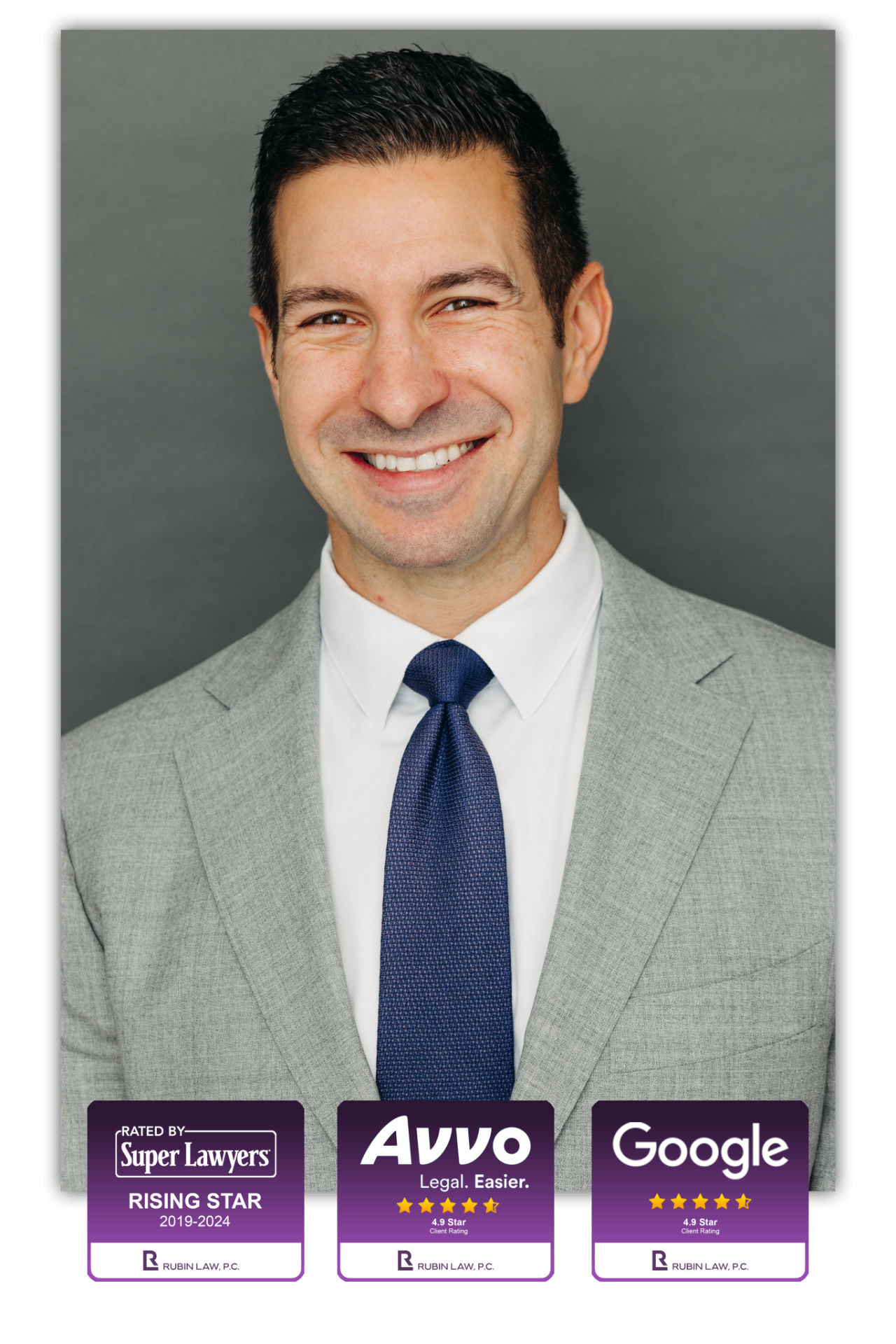
June 20, 2026•2,685 words•By Daniel S. Rubin
30+ Years ExperienceFree ConsultationAvailable 24/7
California Penal Code 1001.36 offers a crucial legal lifeline by allowing eligible defendants with qualifying mental health conditions to pause their criminal cases and enter a treatment program. If you successfully complete this pre-trial diversion program, the court dismisses your criminal charges entirely and seals your arrest record. For those facing the frightening reality of a criminal charge in Southern California, securing mental health diversion through an experienced team like Rubin Law, P.C. can mean the difference between life-altering prison time and a genuine second chance.
What is California Penal Code 1001.36? (The Basics)
Definition and Purpose of Pre-Trial Mental Health Diversion
California enacted Penal Code 1001.36 (PC 1001.36) to break the cycle of individuals with severe mental illnesses flowing into the prison system. Instead of punishing a person for conduct driven by an illness, pre-trial diversion redirects them into supervised clinical treatment. The core philosophy is simple: rehabilitation is far more effective at protecting public safety and reducing future offenses than incarceration.
How Diversion Pauses Criminal Proceedings Without a Plea
Traditional probation requires a defendant to plead guilty first. PC 1001.36 is entirely different because it is a pre-trial diversion program. Your defense attorney files a motion to pause the case before any trial or conviction takes place. You do not have to confess or enter a guilty plea to enter the program. The criminal case remains completely frozen while you undergo treatment.
Key Takeaways: Complete Dismissal and Sealing of Your Record
When you finish your court-approved treatment plan, the legal reward is substantial. The judge will officially dismiss your criminal charges. Furthermore, your arrest records are legally sealed under the statute. For almost all legal and employment purposes, the arrest is deemed never to have occurred, safeguarding your career, housing options, and clean record.
Statutory Eligibility Requirements for Mental Health Diversion
Qualifying Mental Health Conditions Under the DSM-5
To qualify for diversion, you must have a documented diagnosis from a licensed mental health professional using the Diagnostic and Statistical Manual of Mental Disorders (DSM-5). Commonly approved conditions include:
Schizophrenia and Schizoaffective Disorder The Law Office of Zak Fisher
Bipolar Disorder The Law Office of Zak Fisher
Post-Traumatic Stress Disorder (PTSD) The Law Office of Zak Fisher
Major Depressive Disorder My Rights Law Group
Generalized Anxiety Disorder The Law Office of Zak Fisher
Explicitly Excluded Conditions
The California Legislature explicitly excluded certain conditions from PC 1001.36 eligibility. Even if these conditions heavily influenced a person's behavior, they cannot form the sole basis for a mental health diversion petition:
Antisocial Personality Disorder
Borderline Personality Disorder
Pedophilic Disorder
The Five-Year Rule for Prior Diagnosis or Treatment
Under recent updates to the statute, the evidence of your mental health condition must be current and verifiable. Your defense team must present proof that you received a diagnosis or underwent active clinical treatment for the condition within the last five years. If your records are older or missing, your legal counsel must coordinate a fresh, updated evaluation with a forensic psychologist or psychiatrist.
Proving the "Psychiatric Nexus"
It is not enough to simply prove you have a diagnosis. The defense must demonstrate a clear "psychiatric nexus"—meaning your mental illness was a major motivating, causal, or contributing factor in the alleged crime. For example, if a severe manic episode or a PTSD flashback directly impaired your judgment and triggered an arrest, a qualified expert must document that connection in a formal evaluation.
The SB 1223 Burden Shift: Protecting the Defendant
Historically, defense attorneys faced an uphill battle trying to convince skeptical judges that an illness caused a crime. A major legislative update via Senate Bill 1223 (SB 1223) significantly changed the legal landscape in favor of the defense.
Now, if your defense team presents a qualified DSM-5 diagnosis, the court is required by law to find that the mental disorder was a significant factor in the offense. The burden of proof shifts heavily to the prosecution. The District Attorney must prove by "clear and convincing evidence" that the illness was not a motivating factor to defeat your petition.
Defendant Consent and the Mandatory Speedy Trial Waiver
To participate in diversion, you must personally consent to the program in writing. You must also agree to waive your constitutional right to a speedy trial. This waiver ensures that the prosecution does not lose its ability to try the case later if you fail to finish the required program.
Suitability Criteria: What Judges Look For Before Approving Diversion
Clinical Treatability
The court wants reassurance that the diversion program will work. A qualified mental health expert must declare that your specific symptoms are likely to respond positively to clinical care. The treatment plan must be realistic, structured, and tailored to manage the exact behaviors that led to your arrest.
Public Safety Assessment
Judges carry a heavy responsibility to protect the community. Under PC 1001.36, the court will deny diversion if it determines that you pose an "unreasonable risk of danger to public safety." In California, this specific legal standard means the judge believes you are highly likely to commit a "Super Strike" offense (such as murder, attempted murder, or severe sex crimes) while unsupervised in the community.
Structuring an Approved Inpatient or Outpatient Treatment Plan
An abstract promise to "go to therapy" will not satisfy a California judge. Your defense attorney must present a meticulous, pre-arranged treatment plan. This plan can involve residential inpatient care, intensive outpatient programs (IOP), regular psychiatric medication management, and routine drug testing if substance abuse is a co-occurring issue.
Legislative Updates: SB 483 Alignment
Recent clean-up legislation under SB 483 reinforces that judges should prioritize community-based mental health rehabilitation over unnecessary jail sentences. The update guides courts to look closely at the long-term viability of the proposed treatment plan, rather than denying an application based purely on standard bias against mental health challenges.
Excluded Offenses: Crimes That Do Not Qualify Under PC 1001.36
While PC 1001.36 applies to an expansive list of misdemeanors and felonies, the law automatically bars certain serious offenses from diversion eligibility.
Excluded Offenses (Ineligible)
Eligible Offenses (With Court Approval)
• Murder & Voluntary Manslaughter
• Grand Theft & Petty Theft
• Rape & Felony Sex Offenses
• Assault & Battery
• Lewd Acts on a Child under 14
• Vandalism & Trespassing
• Weapons of Mass Destruction
• Drug Possession & Sales
• Serna Fly Offenses
• Certain Domestic Violence Charges
How Pre-Existing "Strikes" and Prior Convictions Impact Your Petition
If you have prior convictions on your record, particularly under California’s Three Strikes Law, the prosecution will fight your diversion motion aggressively. While a prior strike does not automatically disqualify you by the letter of the law, it influences the judge's assessment of public safety risk. Your legal counsel must work tirelessly to show that your current mental health crisis is entirely distinct from your past history.
The Rubin Law Approach: Securing Diversion in LA County
Navigating the criminal justice system with a mental illness requires a highly strategic and personalized defense.Rubin Law, P.C. utilizes a comprehensive multi-step system specifically designed to handle the nuances of Southern California courtrooms.
[1. Pre-Filing Intervention] ──► [2. 5150 Hold Transition] ──► [3. Prima Facie Motion] ──► [4. Courtroom Advocacy]
Step 1: Pre-Filing Intervention — Intercepting Charges Before Arraignment
The strongest defense begins before a case ever reaches a judge. If you contact Rubin Law, P.C. immediately after an arrest, the firm can initiate a pre-filing intervention. This involves gathering psychiatric medical records and delivering them directly to the reviewing District Attorney or City Attorney before formal charges are filed. By demonstrating early on that the incident stemmed from a mental health crisis, it is sometimes possible to prevent the case from being filed at all.
Step 2: Transitioning from a 5150 Psychiatric Hold to a Legal Defense Plan
Many mental health cases begin when police place an individual on an involuntary 72-hour psychiatric hold (known as a 5150 hold). Families are often left terrified, confused, and unsure of what happens when the medical hold ends and the criminal case begins. Rubin Law, P.C. steps into this gap, coordinating with hospital staff, protecting the client's rights, and immediately pivoting that medical intervention into a legal strategy for PC 1001.36 court diversion.
Step 3: Drafting the Motion and Making the Prima Facie Informal Showing
If charges are formally filed, the firm drafts an aggressive, evidence-backed Motion for Mental Health Diversion. To prevent the judge from dismissing the request out of hand, the motion must establish a prima facie case. This means the paperwork contains enough solid medical evaluations, diagnostic histories, and expert declarations to prove on face value that the client meets the strict legal criteria for the program.
Step 4: Navigating Courthouses Across LA County
Every courthouse operates under its own distinct culture, local rules, and judicial temperaments. Rubin Law, P.C. brings extensive local experience into major Los Angeles jurisdictions, including:
Clara Shortridge Foltz Criminal Justice Center (Downtown LA)
Van Nuys Courthouse (San Fernando Valley)
Airport Courthouse (West LA)
Compton Courthouse (South LA)
Understanding the specific tendencies of local prosecutors and judges in these buildings is critical to getting a diversion package reviewed fairly.
Step 5: The Contested Diversion Hearing and Defeating DA Opposition
The District Attorney's office frequently objects to diversion, arguing that the defendant is a threat to the public or that the crime was driven by choice rather than illness. During the contested hearing, Rubin Law, P.C. advocates directly for you, presenting cross-examinations of state witnesses, using the SB 1223 burden shift to your advantage, and showing the judge that the customized treatment plan guarantees community safety.
During the Program: Supervision, Progress Reviews, and Relapse
Role of the Qualified Mental Health Expert and Treatment Provider
Once a judge grants diversion, you are placed under the care of a licensed treatment provider. This expert supervises your daily or weekly progress and acts as an objective reporter. They are required to submit regular updates detailing your attendance, medication compliance, and overall clinical improvement.
Mandatory Case Progress Reviews
You must return to court periodically—typically every 30 to 90 days—for a progress review hearing. The judge reads the treatment provider's reports to confirm you are actively participating. Your defense team stands beside you at every review to ensure minor misunderstandings do not jeopardize your standing.
What Happens If a Client Suffers a Relapse?
Mental health recovery is rarely a straight line; clinical relapses can happen. If a client faces an episodic setback or struggles with treatment compliance, the prosecutor may immediately ask the judge to terminate the diversion program.
Rubin Law, P.C. handles these delicate family and legal crises with extreme urgency. The firm works with your doctors to adjust the treatment plan, demonstrating to the court that a relapse is a medical issue requiring care adjustments rather than immediate jail time.
Reinstating Criminal Proceedings: Violations and Term Limits
If a defendant completely abandons their treatment plan, refuses to take mandatory medications, or commits a significant new, unrelated crime, the judge can terminate diversion. If terminated, the pre-trial pause is lifted, and the original criminal case resumes exactly where it left off. Furthermore, the program has absolute statutory time limits:
Misdemeanor Diversion: Limited to a maximum of 1 year. My Rights Law Group
Felony Diversion: Limited to a maximum of 2 years. Law Offices of J. Patrick Carey
Why Choose Rubin Law, P.C. for Mental Health Criminal Defense?
Real Los Angeles Courtroom Experience and Familiarity with Local Judges
The local criminal courts are highly complex, fast-moving environments. Daniel Rubin provides clients with an invaluable home-court advantage across Los Angeles County. He knows how local prosecutors assemble their arguments and understands the specific legal standards local judges require before they feel comfortable signing off on a diversion order.
A Second-Generation Criminal Defense Practice Dedicated to Tailored Legal Strategies
As a second-generation criminal defense attorney, Daniel Rubin grew up watching how compassionate, highly strategic legal defense can preserve human dignity. Rubin Law, P.C. does not run a high-volume "case mill." The firm takes a selective, deeply focused approach, taking the necessary time to fully understand a client's specific psychiatric history and background.
Moving Beyond "Shortcuts" to Protect Your Future and Career
Many law firms rush clients into quick plea bargains just to close files quickly. Rubin Law, P.C. rejects these shortcuts. The firm treats mental health issues with the seriousness they deserve, utilizing constitutional search and seizure protections, aggressive motion practice, and thorough clinical planning to secure complete dismissals that shield your long-term career, professional licenses, and family life.
Frequently Asked Questions (FAQs)
Can I get mental health diversion for a DUI charge in California?
No. Under long-standing California case law and vehicle codes, driving under the influence (DUI) offenses are explicitly barred from pretrial diversion programs. Even if a severe mental health crisis or medication reaction contributed to the driving episode, judges are statutorily prohibited from granting PC 1001.36 diversion for an active DUI charge. An attorney must explore alternate defense paths in these scenarios.
How do defense attorneys manage communication with the defendant's family?
When an individual is suffering from a major mental illness, family support is vital to a successful defense. However, attorney-client privilege dictates that the attorney's primary legal loyalty remains strictly with the defendant. Rubin Law, P.C. balances this dynamic carefully by setting up clear communication pathways, securing necessary confidentiality waivers from the client, and keeping worried family members informed while firmly protecting the client's legal rights.
Does an inability to pay for treatment or restitution bar you from diversion?
No. The statute explicitly protects indigent defendants. Under California law, a court cannot deny your motion for mental health diversion simply because you lack the financial resources to pay for private medical care or immediate victim restitution. If you cannot afford private programs, the court and your defense team must coordinate placement through public county mental health agencies or community-funded non-profit programs.
Who can access my records after a case is successfully dismissed and sealed?
Once a judge orders your record sealed under PC 1001.36, the arrest and court files are closed to the public, including private employers, landlords, and standard background check companies. You can legally state on job applications that you have never been arrested or convicted of that crime. However, a sealed record remains accessible to law enforcement agencies, the court system, and certain state licensing boards (such as nursing, medical, or legal boards) if you apply for a professional license.
What is the difference between mental health diversion and being found incompetent to stand trial?
Mental health diversion (PC 1001.36) is a proactive program for individuals who understand the court proceedings but whose underlying illness drove the criminal conduct; it leads to a dismissal of charges through treatment. In contrast, "Incompetent to Stand Trial" (IST under PC 1368) is a mandatory pause button pulled when a defendant's current mental state is so deteriorated that they cannot understand the court process or assist their lawyer. IST focuses strictly on restoring basic mental competency, not dismissing the case.
Can a violent felony qualify for mental health diversion?
Yes, certain violent felonies can qualify for diversion, provided they are not on the explicitly banned list (such as murder or rape). For example, charges like Assault with a Deadly Weapon or Criminal Threats can receive PC 1001.36 approval if the defense team can provide powerful psychiatric evidence showing the violent outburst was tied directly to an unmanaged, treatable condition and that a rigorous treatment plan will mitigate any ongoing public safety risk.
Secure Your Second Chance — Contact Rubin Law, P.C.
A criminal charge compounded by a mental health crisis can make you feel completely helpless, but you do not have to face the legal system alone. California's mental health diversion statute is a powerful path toward rehabilitation and a completely clean record, but the windows of opportunity close fast once formal court proceedings accelerate. Contact Rubin Law, P.C. today at (310) 905-9269 or visit rubinlawpc.com to schedule a confidential consultation. Let an experienced, compassionate Los Angeles defense attorney build the comprehensive medical and legal strategy you need to protect your future.
About the author
Written by Daniel S. Rubin, Los Angeles Criminal Defense Attorney
Daniel A. Rubin has defended thousands of clients across Los Angeles County against felony, misdemeanor, and federal charges — from DUI and drug crimes to violent felonies and white-collar prosecutions.
Facing a high-stakes legal battle can feel overwhelming, but under California Penal Code section 1001.36, can serious felony charges be completely dismissed under mental health diversion in…
For a licensed professional, a criminal accusation threatens more than just your liberty—it places your livelihood directly on the line. Navigating a criminal investigation in California is…
California's lawmakers introduced a key change with California Penal Code 1001.95 . It started on January 1, 2021. This law offers a new way for people facing some misdemeanor charges. It lets them…