
Murder Defense · Los Angeles County
Los Angeles Murder Defense Attorney
In Custody on a Homicide Charge?
Trial-tested. Life-sentence defense. Twenty-four-hour response.
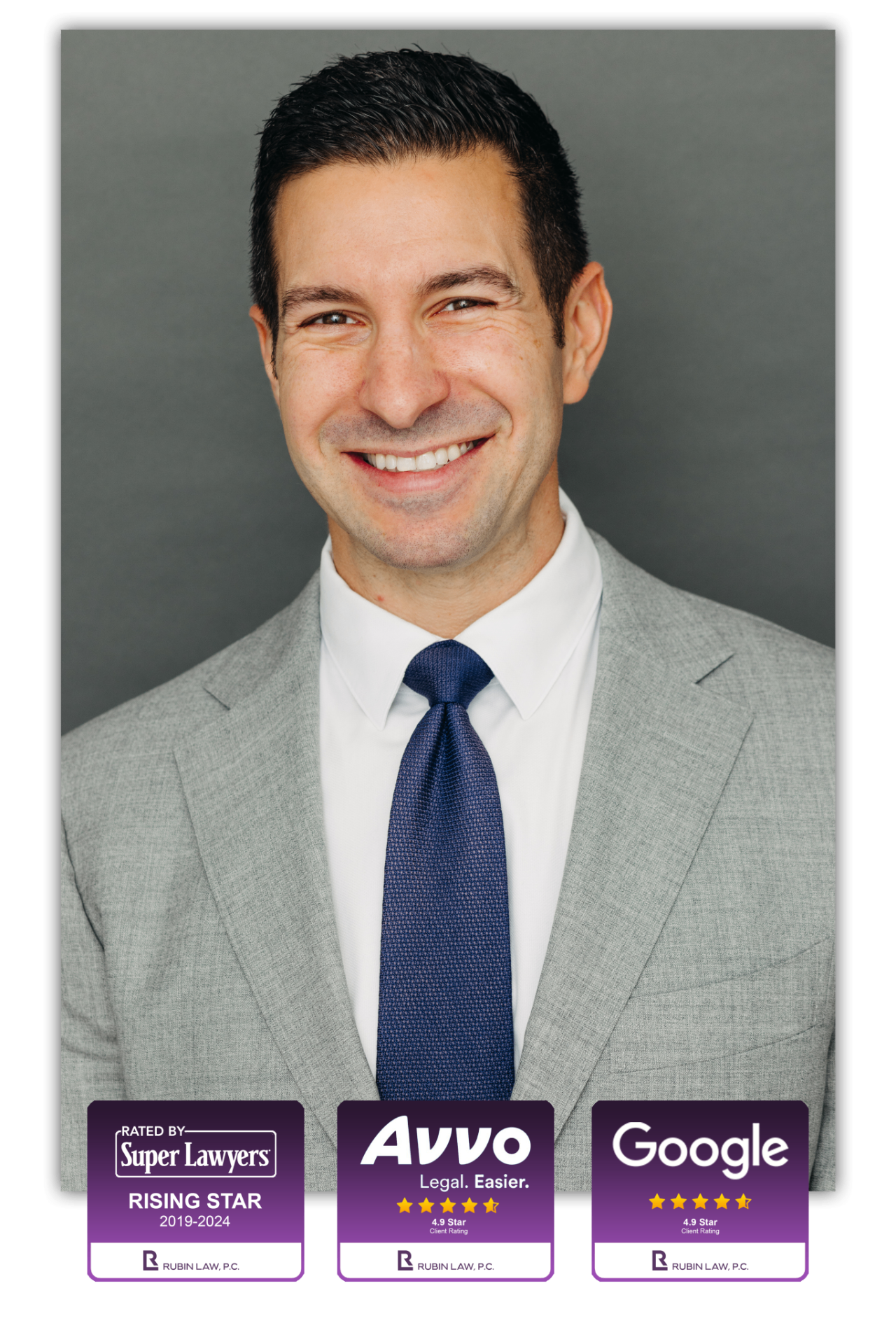
Daniel S. RubinHomicide Defense Attorney
01 — Quick Facts
California Murder — At a Glance
02 — California Murder Law
How California Defines Murder
Penal Code §187 (opens in new tab) defines murder as the unlawful killing of a human being with malice aforethought. Malice is either express (intent to kill) or implied (reckless disregard for human life). The distinction between first-degree, second-degree, voluntary manslaughter, and involuntary manslaughter turns on premeditation, provocation, and mental state — the fights that decide whether a case is 25-to-life or 4 years.
SB 1437 (2019) narrowed the felony-murder rule dramatically: the defendant must now be the actual killer, an aider-and-abettor with intent to kill, or a "major participant" who acted with reckless indifference. SB 775 (2021) extended these protections to attempted murder and voluntary manslaughter. Together, these reforms have opened post-conviction relief pathways for hundreds of Californians serving life sentences.
03 — Penalties
Murder Penalties in California — What You Are Facing
| Offense | Statute | Base Term | Special Circumstances | Firearm Enhancement | Parole Eligibility |
|---|---|---|---|---|---|
| First-Degree Murder | PC §189 | 25 years to life | LWOP or death (§190.2) | 10/20/25-to-life | After 25 yrs (unless LWOP) |
| Second-Degree Murder | PC §187 | 15 years to life | 20-to-life (peace officer) | 10/20/25-to-life | After 15 yrs |
| Attempted Murder — Premeditated | PC §664/187 | Life w/ parole | — | 10/20/25-to-life | After 15 yrs w/o gun |
| Attempted Murder — Non-Premeditated | PC §664/187 | 5, 7, or 9 yrs prison | — | 10/20/25-to-life | 85% rule |
| Voluntary Manslaughter | PC §192(a) | 3, 6, or 11 yrs prison | — | +10/20/25-to-life if firearm | 85% rule |
| Involuntary Manslaughter | PC §192(b) | 2, 3, or 4 yrs prison | — | — | 50% credits |
| Watson (DUI) Murder | PC §187 | 15 years to life | — | — | After 15 yrs |
Special-circumstance findings under PC §190.2 — multiple victims, financial-gain motive, torture, witness killing, gang killings — trigger LWOP or death-penalty eligibility even on a first offense. SB 1437 has narrowed felony-murder liability but not other pathways.
Additional Consequences Beyond the Courtroom
- Lifetime state and federal firearm ban
- Strike prior — 25-to-life on any future felony conviction
- 85% conduct-credit rule for parole eligibility (PC §2933.1)
- LWOP defendants are ineligible for parole absent commutation
- Loss of voting rights while in state prison
- Youth Offender Parole (SB 260) available for offenses under 26
- Franklin hearings preserve mitigation for future parole consideration
- Post-conviction SB 1437 / §1170.95 relief for felony-murder defendants
04 — Defense Strategies
How We Defend Homicide Cases
Self-Defense / Defense of Others
Complete defense to murder.
- We build the timeline, forensic evidence, and prior-threats history to prove reasonable belief of imminent death or GBI.
Imperfect Self-Defense
Honest but unreasonable belief in the need for force reduces murder to voluntary manslaughter.
- A frequent and powerful negotiation lever.
Heat of Passion
Provocation sufficient to arouse reason in an ordinary person reduces murder to voluntary manslaughter — often turning 25-to-life into 6 years.
Mistaken Identification
Eyewitness misidentification remains the leading cause of wrongful convictions.
- Cross-racial IDs and stress-affected memory are challenged with defense-retained experts.
SB 1437 / SB 775 Post-Conviction Relief
Vacate murder or attempted-murder convictions where the defendant was not the actual killer and did not act with intent to kill or reckless indifference.
Forensic Challenge
DNA, gunshot residue, ballistic tool-mark, and cell-tower evidence face defense-expert scrutiny.
- Junk-science convictions are increasingly reversed on appeal.
05 — Types of Homicide
Homicide Charges We Defend
Willful, deliberate, premeditated killing. Or lying-in-wait, poison, torture, bomb, or drive-by shooting.
Learn moreIntentional killing without premeditation, or implied-malice killings with conscious disregard for life.
Learn moreLife-eligible felony. Premeditated attempts carry life with parole plus 10-20-life enhancements.
Learn moreVoluntary Manslaughter
Heat-of-passion or imperfect self-defense killings. Common reduction from murder charges.
Learn moreInvoluntary Manslaughter
Killings during commission of a lawful act done negligently or unlawful non-felony.
Learn more06 — Court Process
How Murder Cases Move Through LA Courts
1
Arrest & Booking
48-hour first appearance under PC §825. Bail is often denied on murder cases under PC §1270.5.
2
Grand Jury or Prelim
Felony filter — DA proves probable cause. We cross-examine every witness and lock in testimony.
3
Discovery & Investigation
Full DA file, police reports, forensic evidence, cell records, and body-cam. We retain independent investigators and experts.
4
Motions Practice
PC §995, PC §1538.5, Pitchess, Kelly-Frye, Aranda-Bruton, and severance motions. Motions win murder cases.
5
Plea Negotiation
Murder-to-manslaughter negotiations. Strike-and-enhancement stipulations. Life-with-parole vs LWOP negotiations in special-circumstances cases.
6
Jury Trial
12 jurors, unanimous, proof beyond a reasonable doubt. Guilt phase and — in death-eligible cases — separate penalty phase.
7
Sentencing & Appeal
Comprehensive mitigation package. Direct appeal, habeas corpus, and SB 1437/775 petitions for post-conviction relief.
07 — Possible Outcomes
Possible Outcomes in a Murder Case
Case Dismissed or Not Filed
The best possible outcome — no conviction, no record.
- PC §995 dismissal after prelim on failure to show malice
- Suppression of confessions under Miranda or Massiah
- Prefile intervention in still-open investigations
Reduced to Manslaughter
- PC §187 murder reduced to voluntary manslaughter (PC §192(a))
- Second-degree murder reduced under People v. Chun / merger doctrine
- Felony-murder relief under SB 1437 / PC §1170.95
Minimized Sentence
If a conviction cannot be avoided, we fight for the lowest possible exposure.
- Strike and firearm enhancements stricken under Romero and PC §1385
- Youth-offender parole hearings under PC §3051
- Concurrent instead of consecutive life terms
Post-Conviction Relief
- SB 1437 resentencing under PC §1172.6
- Youth-offender and Franklin-hearing mitigation
- Habeas corpus based on newly discovered evidence
08 — Collateral Consequences
Beyond the Sentence
- Automatic strike under Three Strikes Law
- Immigration: murder is a per se deportable aggravated felony
- Lifetime firearm prohibition — state and federal
- Civil wrongful-death exposure with lower burden of proof
- Termination of parental rights in most cases
- Permanent forfeiture of professional licensing
- Public housing, Section 8, and federal-benefit disqualification
- Ineligibility for expungement or standard PC §1203.4 relief
09 — FAQs
Murder Defense Questions — Los Angeles
What is the difference between first-degree and second-degree murder?
First-degree murder (PC §189) requires willful, deliberate, premeditated killing — or killing by specific means like lying in wait, poison, torture, or drive-by shooting. Second-degree murder is any other intentional killing or implied-malice killing without premeditation. First-degree carries 25-to-life; second-degree carries 15-to-life. The distinction turns on the time and reflection preceding the killing — often the central issue at trial.
What are special circumstances?
Special circumstances under PC §190.2 elevate first-degree murder to LWOP or death eligibility. Triggers include multiple victims, murder for financial gain, torture, witness killing, murder during commission of certain felonies, murder of a peace officer, and hate-motivated killings. Special-circumstances allegations are frequently negotiable in exchange for pleas to first-degree with parole — the most consequential negotiation in a homicide case.
Can murder be reduced to manslaughter?
Yes. Heat of passion (PC §192(a)) and imperfect self-defense reduce murder to voluntary manslaughter — a difference of 25-to-life vs 3-6-11 years. The reduction happens through DA plea negotiation, jury instruction, or Court motion. Every strong homicide defense builds toward one of these reductions if outright acquittal is not achievable.
What did SB 1437 change?
Senate Bill 1437 (2019) narrowed felony-murder liability. A defendant can no longer be convicted of felony murder unless they (1) were the actual killer, (2) aided-and-abetted with intent to kill, or (3) were a 'major participant' in the underlying felony who acted with reckless indifference to human life. SB 775 (2021) extended relief to attempted murder and voluntary manslaughter. Thousands of Californians have petitioned for resentencing under PC §1172.6.
Is bail available in murder cases?
Rarely. PC §1270.5 permits bail denial in cases where 'the proof is evident or the presumption great' of murder. In practice, bail is denied in nearly all murder cases at arraignment. Where bail is set, it typically runs $1–5 million cash-only. Bail-review motions succeed only in rare circumstances — usually with substantial mitigation and community support.
What happens in an attempted-murder case?
Attempted murder under PC §664/187 is a life-eligible felony. Willful, deliberate, premeditated attempts carry life with the possibility of parole; non-premeditated attempts carry 5, 7, or 9 years. Firearm enhancements under PC §12022.53 add 10, 20, or 25-to-life on top. Gang enhancements under PC §186.22 can add another 10 years or life. These cases require the same trial-level defense preparation as completed homicides.
Can a murder conviction be appealed or reopened?
Yes. Direct appeal preserves trial-error challenges. Habeas corpus challenges constitutional violations. SB 1437/775 petitions (PC §1172.6) allow resentencing where the felony-murder or natural-and-probable-consequences theories were used. California Racial Justice Act (PC §745) permits challenges based on race-based charging or sentencing disparities. Franklin hearings preserve youth-offender mitigation for juveniles sentenced as adults.
Does California still have the death penalty?
California retains the death penalty in statute but Governor Newsom imposed a moratorium in 2019. No executions are scheduled and death judgments are effectively being converted to LWOP. However, prosecutors can still file special-circumstances allegations seeking death, and the moratorium can be lifted by a future governor. Death-qualified juries and penalty-phase representation remain critical in special-circumstances cases.
What is the difference between first and second degree murder in California?
Both first-degree and second-degree murder require malice aforethought under PC §187 — an unlawful killing with either the express intent to kill or the implied disregard for human life. The line between them is drawn by PC §189 and turns on premeditation, deliberation, and the specific means used. First-degree murder requires the prosecution to prove that the killing was 'willful, deliberate, and premeditated' — meaning the defendant weighed the decision to kill, however briefly, and acted on a considered plan. First-degree also includes killings by specific enumerated means regardless of premeditation: destructive devices, poison, lying in wait, torture, drive-by shooting from a vehicle, armor-piercing ammunition, and killings during enumerated felonies (subject to SB 1437's felony-murder limits). Second-degree murder is any other killing done with malice — including express-intent killings that were not premeditated and implied-malice killings where the defendant knowingly engaged in conduct with a high probability of causing death (a common theory in DUI-with-priors homicide cases under People v. Watson). The sentencing gap is enormous: first-degree carries 25-to-life (LWOP or death with special circumstances), while second-degree carries 15-to-life. Because premeditation can form in seconds under California law, the degree question is often the central battleground at trial and in negotiation — an experienced homicide defense frequently reframes a first-degree filing as a second-degree case, opening the door to further reduction to voluntary manslaughter.
What is the felony murder rule in California after SB 1437?
Before 2019, California's felony-murder rule allowed prosecutors to charge any participant in certain felonies with first-degree murder if a death occurred during the crime — even a getaway driver who never entered the store, and even when the killing was committed by a co-participant or a police officer. Senate Bill 1437 (2019), codified at PC §§188 and 189, dramatically narrowed that liability. Under current law, a defendant can be convicted of felony murder only if the prosecution proves one of three things: (1) the defendant was the actual killer; (2) the defendant, though not the killer, aided and abetted the murder with the specific intent to kill; or (3) the defendant was a 'major participant' in the underlying felony and acted with 'reckless indifference to human life' as defined in People v. Banks (2015) and People v. Clark (2016). The 'natural and probable consequences' doctrine has also been abolished for murder. SB 775 (2021) extended these reforms to attempted murder and voluntary manslaughter convictions obtained under the old law. Anyone convicted of felony murder before the reforms — or under a natural-and-probable-consequences theory — can petition for resentencing under PC §1172.6. If the petition is granted, the murder conviction is vacated and the defendant is resentenced on the underlying felony only, which for many clients means the difference between LWOP and immediate release. We litigate §1172.6 petitions regularly and consider them at the sentencing stage of every new homicide filing.
Can I claim self-defense in a murder case in California?
Yes — self-defense is one of the most powerful defenses in a California homicide case, and it comes in two distinct forms with dramatically different outcomes. Perfect self-defense under PC §197 is a complete defense that results in acquittal. It requires the defendant to have (1) reasonably believed they were in imminent danger of death or great bodily injury, (2) reasonably believed that force was necessary to defend against that danger, and (3) used no more force than was reasonably necessary. Critically, California has no duty to retreat under the Stand Your Ground doctrine reflected in CALCRIM 505 — a person who is not the initial aggressor may stand their ground and even pursue an assailant until the danger has passed. The Castle Doctrine (PC §198.5) creates a presumption of reasonable fear when an intruder unlawfully enters a residence. Imperfect self-defense is a partial defense recognized in People v. Flannel — the defendant actually believed they were in imminent danger and that force was necessary, but that belief was unreasonable. Imperfect self-defense does not acquit, but it reduces murder to voluntary manslaughter (PC §192(a)) — dropping the exposure from 15- or 25-to-life down to 3, 6, or 11 years. Building either defense requires early investigation: preserving physical evidence, locating witnesses before memories fade, obtaining medical records showing prior injuries or threats, and often retaining a use-of-force expert. Self-defense is asserted by pleading not guilty and shifting the burden to the prosecution to disprove the defense beyond a reasonable doubt.
What are special circumstances in a California murder case?
'Special circumstances' is the term for the aggravating factors listed in PC §190.2 that elevate a first-degree murder to a capital case, exposing the defendant to either the death penalty or life without the possibility of parole (LWOP). Under the current moratorium, death sentences are not being carried out, but LWOP is very much active — and unlike a standard 25-to-life sentence, LWOP means no youth-offender parole hearing, no elderly parole, and no earned credits toward release. There are 22 enumerated special-circumstance categories, including: murder for financial gain; murder by explosive device or poison; murder of a peace officer, firefighter, prosecutor, judge, or witness; murder to prevent testimony or in retaliation for it; murder during the commission of an enumerated felony (robbery, rape, burglary, kidnapping, arson, carjacking); multiple murders in the same proceeding; drive-by murder with intent to inflict death; gang-motivated murder under PC §186.22; hate-crime murder based on protected characteristics; and torture murder. The DA has discretion whether to allege special circumstances, and that allegation is one of the most consequential decisions in the case. Effective defense at the charging stage — through prefile advocacy, mitigation packages under the DA's own charging guidelines, and challenges to the sufficiency of the underlying facts — can result in the special-circumstance allegation being declined or withdrawn, converting an LWOP case into a 25-to-life case where parole eventually becomes possible. At trial, each element of each special circumstance must be proven beyond a reasonable doubt to a unanimous jury, and the penalty phase (if reached) is a separate proceeding with its own evidentiary rules and mitigation presentation.
California Law Guides
Related California Laws — Murder Defense
Deep-dive statute explainers from our Laws Hub — how each charge is filed, defended, and sentenced in California courts.
Homicide Laws California
California homicide law ranges from justifiable homicide with no criminal liability to first degree murder with a possible death penalty.
Read the Full GuideFirst Degree Murder California
First degree murder under PC §189 requires premeditation and deliberation.
Read the Full GuideSecond Degree Murder California
Second degree murder carries 15 years to life in state prison.
Read the Full GuideVoluntary Manslaughter California
Voluntary manslaughter is a killing in the heat of passion or upon sudden quarrel without malice.
Read the Full GuideWatson Murder DUI
When a DUI causes a death and the driver has a prior DUI conviction, California prosecutors can charge second degree murder under PC §187.
Read the Full GuideVehicular Manslaughter California
Vehicular manslaughter while intoxicated (PC §191.5) carries up to 10 years.
Read the Full GuideExplore More