
Domestic Violence Defense · Los Angeles County
Los Angeles Domestic Violence Lawyer
Protective Order Just Issued?
Firearm rights. Custody. Immigration. Every DV consequence — defended.
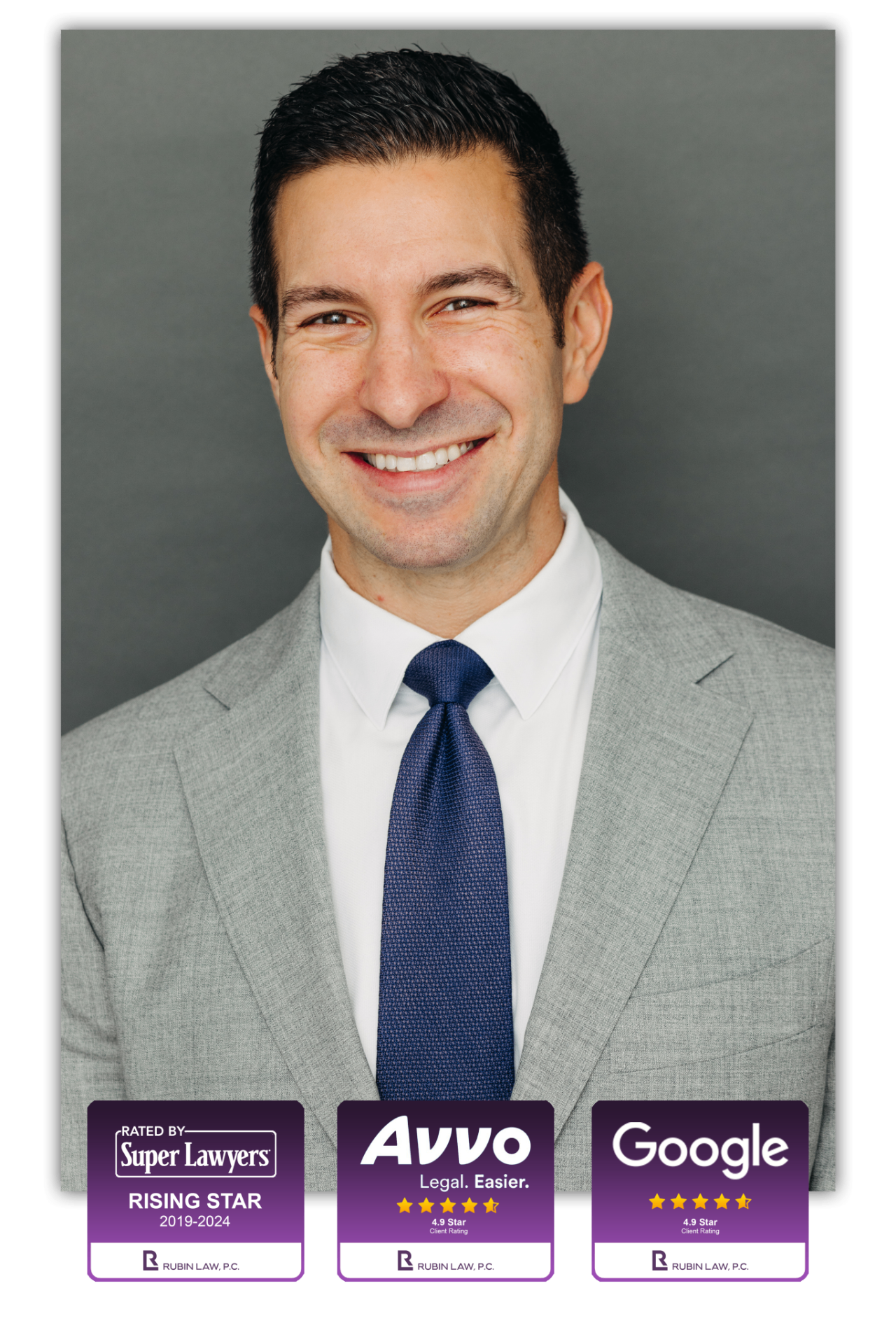
Daniel S. RubinDomestic Violence Attorney
01 — Quick Facts
California Domestic Violence — At a Glance
02 — California DV Law
How California Defines Domestic Violence
California's primary DV statute is Penal Code §273.5 (opens in new tab) — corporal injury to a spouse, cohabitant, dating partner, or co-parent. The injury requirement is minimal: any visible mark or "traumatic condition" — even a bruise — is enough. Domestic battery under PC §243(e)(1) (opens in new tab) requires no visible injury at all.
Prosecutors often add assault under PC §240, criminal threats under PC §422, and protective-order violations under PC §273.6 — each carrying its own firearm and immigration consequences. Whether the case is filed as §273.5 (a strike-eligible wobbler when GBI is alleged) or §243(e)(1) (misdemeanor) is a filing decision — and one we routinely challenge prefile.
03 — Penalties
Domestic Violence Penalties in California — What You Are Facing
| Offense | Classification | Custody | Fine | Probation | Firearm Ban | 52-Week Class |
|---|---|---|---|---|---|---|
| Domestic Battery | PC §243(e)(1) · Misdemeanor | Up to 1 year jail | Up to $2,000 | 3 years summary | 10-yr state / lifetime federal | Mandatory |
| Corporal Injury — Misdemeanor | PC §273.5 | Up to 1 year jail | Up to $6,000 | 3 years | 10-yr state / lifetime federal | Mandatory |
| Corporal Injury — Felony | PC §273.5 | 2, 3, or 4 yrs prison | Up to $6,000 | Rarely | Lifetime | Mandatory |
| §273.5 with Prior (within 7 yrs) | PC §273.5(f) | 2, 4, or 5 yrs prison | Up to $10,000 | Rarely | Lifetime | Mandatory |
| Criminal Threats | PC §422 · Wobbler | 16 mo, 2, or 3 yrs prison (felony) | Up to $10,000 | 3 years | Lifetime (strike) | No |
| Protective-Order Violation | PC §273.6 · Misd/Wobbler | Up to 1 year jail; enhanced with injury | Up to $1,000 | 3 years | 10-year | No |
| GBI Enhancement | PC §12022.7 | +3 to 6 yrs consecutive | — | No | Lifetime | — |
A §273.5 charged with GBI (§12022.7) becomes a strike offense with the 85% conduct-credit rule — the same rule that applies to violent felonies like robbery and rape.
Additional Consequences Beyond the Courtroom
- Lifetime federal firearm ban under the Lautenberg Amendment (18 U.S.C. §922(g)(9))
- 10-year California firearm ban (PC §29805) on any DV misdemeanor
- Family Code §3044 rebuttable presumption against custody
- CLETS-tracked criminal protective order for up to 10 years
- Mandatory 52-week batterer's program ($1,500–$3,000 out of pocket)
- Immigration: DV convictions are categorically deportable
- Housing (Section 8) and public-benefits impact
- Professional-license discipline (nursing, teaching, security, medical)
04 — Defense Strategies
How We Fight DV Charges
Self-Defense / Mutual Combat
DV incidents often involve two aggressors.
- We build injuries, 911 audio, and neighbor statements to establish reasonable self-defense.
False Allegation
DV claims made during divorce, custody, or immigration disputes require careful cross-examination and motive impeachment.
Insufficient Injury
§273.5 requires a 'traumatic condition.' We use medical experts to challenge whether the alleged injury meets the statutory standard.
17(b) Reduction
Felony §273.5 can be reduced to a misdemeanor — eliminating prison, strike, and improving immigration posture.
PC §1001.95 Diversion
Misdemeanor DV cases (excluding §273.5) may qualify for judicial diversion — case dismissed after program completion.
Prefile Advocacy
Present the DA with recantation, prior false claims, or third-party witness evidence before charges file — often stopping the case.
05 — Types of DV Charges
Domestic Violence Charges We Defend
Corporal Injury to Spouse
Wobbler. Any visible injury to intimate partner or co-parent. Prison + strike exposure with GBI.
Learn moreDomestic Battery
Misdemeanor. Any offensive touching of an intimate partner. No injury required.
Learn moreCriminal Threats
Wobbler strike. Threat to cause death or great bodily injury with apparent ability to carry out.
Learn moreViolating a Protective Order
Misdemeanor or wobbler with priors. Mandatory jail if any injury results.
Learn moreChild Endangerment
Wobbler when a child is present during DV incident. Serious immigration and custody impact.
Learn moreStalking
Wobbler strike. Willful, malicious, repeated following or harassment with credible threat.
Learn more06 — Possible Outcomes
Possible Outcomes in a Domestic Violence Case
Case Dismissed or Not Filed
The best possible outcome — no conviction, no record.
- Prefile rejection when 911 audio contradicts the arrest report
- Suppression of warrantless entries under PC §1538.5
- DA rejection on Marsy recantation with documented history
Reduced to Non-DV Charge
- PC §273.5 felony reduced to §243(e)(1) misdemeanor
- Plea to disturbing the peace (§415) — no DV lifetime firearm ban
- Strike and GBI enhancements stricken via Romero motion
Minimized Sentence
If a conviction cannot be avoided, we fight for the lowest possible exposure.
- Batterer's Intervention Program in place of jail
- No-contact orders modified to peaceful contact for co-parenting
- Immigration-safe plea alternatives negotiated with the DA
Diversion & Deferred Entry
- Mental-health diversion under PC §1001.36 for underlying conditions
- Military diversion under PC §1001.80
- Judicial diversion under PC §1001.95 in limited misdemeanor DV cases
07 — Protective Orders
EPOs, CPOs, and DVROs — Explained
Emergency Protective Order (EPO)
Issued by the on-scene officer. Lasts 5 court days or 7 calendar days. Common at arrest. Family Code §6250.
Criminal Protective Order (CPO)
Issued in the criminal case at arraignment. Runs the length of the case, up to 10 years post-conviction. PC §136.2.
Domestic Violence Restraining Order (DVRO)
Civil order sought in family court, independent of any criminal case. Standard is preponderance of the evidence. Family Code §6300.
08 — Collateral Consequences
Consequences Beyond the Sentence
- Lifetime federal firearm ban under Lautenberg (18 U.S.C. §922(g)(9))
- Immigration: DV is a deportable offense — even misdemeanor pleas
- Custody presumption against convicted parent (Family Code §3044)
- Mandatory 52-week batterer's intervention program ($1,500–$3,000)
- Employment background check — visible for 7+ years without expungement
- Public housing and Section 8 disqualification
- Loss of concealed-carry permit and firearm ownership
- Professional license discipline (nursing, teaching, contracting, law)
09 — FAQs
Domestic Violence Questions — Los Angeles
Can domestic violence charges be dropped if the alleged victim recants?
The DA — not the victim — controls whether charges are filed and prosecuted. That said, victim recantation, refusal to cooperate, and impeaching prior inconsistent statements dramatically weaken the case. In LA County, victim non-cooperation combined with effective prefile advocacy frequently results in DA rejection, misdemeanor filing, or diversion.
Will I lose my gun rights after a DV conviction?
Yes. Any DV conviction — even a misdemeanor domestic battery under PC §243(e)(1) — triggers a lifetime federal firearm ban under the Lautenberg Amendment (18 U.S.C. §922(g)(9)). California adds a 10-year state prohibition. Expungement under PC §1203.4 does not restore federal firearm rights. Only reduction to a non-DV charge or acquittal preserves gun ownership.
Is PC §273.5 a felony or misdemeanor?
PC §273.5 is a wobbler — the DA can file it as either. Filed as a felony it carries 2, 3, or 4 years state prison and becomes a strike if a great-bodily-injury enhancement attaches. Filed as a misdemeanor the maximum is 1 year county jail. §17(b) reductions at prelim or sentencing can convert a felony to a misdemeanor.
How long does a criminal protective order last?
A Criminal Protective Order (CPO) issued at arraignment lasts the duration of the criminal case. If convicted, the court can extend it up to 10 years under PC §136.2. Emergency Protective Orders (EPOs) issued at arrest last 5–7 days. Family-court DVROs can last up to 5 years and be renewed. All three prohibit contact and firearm possession.
What is the 52-week batterer's program?
PC §1203.097 requires anyone placed on probation for a DV offense to complete a 52-week Batterer's Intervention Program at a state-certified provider. Weekly group sessions, no absences, $50–$60 per session. Total cost $1,500–$3,000. Non-completion violates probation and can trigger jail. The program is mandatory — no exceptions for busy schedules or work conflicts.
Can I be charged with DV if there is no visible injury?
Yes. Domestic battery under PC §243(e)(1) requires no visible injury — only offensive touching of an intimate partner. Criminal threats under PC §422 requires no contact at all. §273.5 requires a 'traumatic condition' which can be as minor as a red mark. Physical injury is not required to be charged with DV in California.
How does a DV charge affect custody?
Family Code §3044 creates a rebuttable presumption that giving physical or legal custody to a DV-convicted parent is detrimental to the child. The presumption applies for 5 years post-conviction and can be overcome only by specific findings on 7 statutory factors. Even DV allegations without conviction can trigger custody consequences in family court.
Are DV charges deportable for non-citizens?
Yes. DV convictions are deportable under INA §237(a)(2)(E). Even misdemeanor §243(e)(1) can trigger removal. Non-citizens should never plead guilty to a DV charge without immigration-informed defense counsel. Many pleas that seem beneficial (e.g. deferred entry, court-diversion programs) still carry immigration consequences. Alternative pleas (§415 disturbing the peace, §602 trespass) may avoid deportability if negotiated correctly.
Can domestic violence charges be dropped if the victim doesn't cooperate?
The alleged victim does not control whether charges are filed or dismissed — that decision belongs entirely to the District Attorney. Under LA County's aggressive 'no-drop' DV policy, prosecutors routinely proceed even when the complaining witness recants, refuses to testify, or actively supports the defendant. That said, victim non-cooperation is one of the most powerful factors that weakens a DV case in practice. Prosecutors can subpoena a reluctant witness and, if they refuse to testify, seek a material-witness body attachment under PC §1332 — though in practice this is rare and often politically unpalatable. More often, the DA tries to prove the case without live testimony using the 911 call (admissible under the 'ongoing emergency' exception in Davis v. Washington), body-worn camera footage of excited utterances, photographs of injuries, and prior statements to officers. Our defense targets each of those substitutes: hearsay objections under Crawford v. Washington, chain-of-custody challenges to photos, and impeachment of the initial statements with recantation evidence. When combined with prefile advocacy — presenting mitigation, therapy enrollment, and the recanting statement to the filing DA before charges are filed — victim non-cooperation frequently results in outright DA rejection, filing as a §415 disturbing-the-peace misdemeanor, or an offer of PC §1001.95 misdemeanor diversion.
What is a criminal protective order in a domestic violence case?
A Criminal Protective Order (CPO) is a court order issued under PC §136.2 at the DV arraignment that prohibits the defendant from contacting, coming near, or communicating with the alleged victim — regardless of the victim's wishes. The judge issues one in nearly every DV case in LA County, often before the defendant has even entered a plea. CPOs come in two forms: a 'no negative contact' order that permits peaceful contact but forbids threats, harassment, or violence; and a 'full stay-away' order that forbids all contact including through third parties and social media, and typically requires the defendant to stay 100 yards from the victim, their home, workplace, school, and vehicle. A full stay-away order can force the defendant out of a shared residence, sever contact with shared children (subject to family-court custody orders), and prohibit firearm possession for the duration. The CPO lasts throughout the criminal case and, on conviction, can be extended up to 10 years under PC §136.2(i). Violating a CPO is a separate crime under PC §273.6 carrying up to 1 year jail — and violations are prosecuted independently even if the case underlying the CPO is ultimately dismissed. At arraignment, we routinely ask the court to issue only a 'no negative contact' order rather than full stay-away when custody, housing, or employment would be disrupted.
Will a domestic violence conviction affect my gun rights?
Yes, permanently under federal law and for at least 10 years under California law. The Lautenberg Amendment (18 U.S.C. §922(g)(9)) makes it a federal felony — punishable by up to 10 years in federal prison — for anyone convicted of a 'misdemeanor crime of domestic violence' to possess a firearm or ammunition. The ban is lifetime and applies even to misdemeanor domestic battery under PC §243(e)(1). California adds a separate 10-year prohibition under PC §29805 for any DV misdemeanor and a lifetime prohibition for any DV felony under PC §29800. If a Criminal Protective Order is issued, the defendant must relinquish all firearms within 24 hours of the order under PC §29825 and file proof of transfer with the court. Expungement under PC §1203.4 does not restore federal firearm rights — this is settled Ninth Circuit law. A California Certificate of Rehabilitation and Governor's Pardon restores state rights but does not override the federal Lautenberg ban. The only ways to preserve firearm rights are: (1) win at trial, (2) negotiate a reduction to a non-DV charge like PC §415 disturbing the peace or PC §602 trespass, or (3) successfully complete PC §1001.95 misdemeanor diversion, which results in dismissal with no conviction. Firearm preservation is one of the primary drivers of our plea negotiation strategy for law-enforcement officers, military members, and lawful gun owners.
What happens if I violate a domestic violence protective order?
Violating a Criminal Protective Order or a family-court DVRO is a separate criminal offense charged under PC §273.6, and it is prosecuted independently of any underlying case. A first violation is a misdemeanor punishable by up to 1 year in county jail and a $1,000 fine. A second violation within 7 years, or any violation involving physical injury, is a wobbler that can be charged as a felony with up to 3 years state prison. Violations are typically discovered through the alleged victim's report, phone records subpoenaed from carriers, social-media messages, third-party witnesses, or GPS data from ankle monitors when one has been imposed as a bail condition. Prosecutors take violations seriously because they undermine the protective purpose of the order — courts routinely revoke bail, add new stay-away conditions, and impose custody time even when the underlying DV case has weaknesses. Critically, 'peaceful contact' violations count: a text message saying 'I miss you,' a Facebook comment, or having a mutual friend deliver a message all qualify if the order forbids contact. Consent from the alleged victim is not a defense — only the court can modify the order. If you have been served with a protective order, do not attempt contact of any kind until we either modify the order in court or the case is resolved. If a violation has already occurred, prompt defense intervention — often through mitigation, therapy documentation, and negotiation with the filing DA — is essential to avoid custody.
California Law Guides
Related California Laws — Domestic Violence
Deep-dive statute explainers from our Laws Hub — how each charge is filed, defended, and sentenced in California courts.
Domestic Violence Laws California
Read the Full GuideCorporal Injury on Spouse California
Read the Full GuideDomestic Battery California
Read the Full GuideDomestic Violence Restraining Orders California
Read the Full GuideDomestic Violence Prefile Intervention
Prefile intervention is contact with the prosecutor before charges are filed to present evidence, witness statements, and mitigation that convinces the DA to reject or reduce the case.
Read the Full GuideEmergency Protective Orders California
An Emergency Protective Order is a short-term restraining order issued by a judge at the request of law enforcement, effective for up to 7 days, ordering the restrained party to stay away and surrender firearms.
Read the Full GuideExplore More