
Can You Drive for Uber with a DUI?
Many people wonder if they can work for Uber with a DUI. The answer is no. Uber's driver DUI policy focuses on safety, banning anyone with a DUI in the last seven years. This rule stops those with a…
A serious DUI accident can change lives in an instant, especially when a fatality occurs. In California, if a person drives under the influence and causes someone's death, they can be charged with murder. This specific charge is known as a Watson Murder, and understanding this complex law is vital for anyone facing vehicular charges.
A "Watson Murder" is a nickname for a second-degree murder charge brought against an individual who drives under the influence of alcohol or drugs and causes a fatal crash. Most fatal car accidents caused by impaired drivers are charged as vehicular manslaughter. However, under specific circumstances, California prosecutors can upgrade the charge to murder.
To secure a Watson Murder conviction, the state must prove that the driver acted with something called "implied malice." This means the driver knew that their actions were dangerous to human life but chose to drive anyway, showing a conscious disregard for that danger.
Unlike first-degree murder, a Watson Murder does not require planning. The prosecutor does not need to show that you intended to hurt or kill anyone. Instead, the law focuses on your mindset before you started driving. The state only needs to prove that you willfully took an action—drinking or using drugs and getting behind the wheel—knowing it could kill someone.
The name for this charge comes from a landmark 1981 California Supreme Court case, People v. Watson. In that case, a driver named Robert Watson was driving with a high blood alcohol level, speeding, and running red lights before colliding with another car, killing two people.
The court ruled that a driver's past knowledge of the dangers of driving under the influence could be used to prove implied malice. This ruling created a new legal pathway. Since 1981, California has used this precedent to charge repeat DUI offenders with murder if they cause a fatal crash.
Implied malice is the foundation of any Watson Murder case. Without it, the state can only pursue manslaughter charges. To prove implied malice, the prosecutor must show the driver was fully aware of the deadly risks of driving under the influence but ignored those risks.
Prosecutors look for specific types of evidence to show that a driver understood the dangers of driving under the influence. They must prove that the driver received formal or explicit warnings about the life-threatening risks of a DUI prior to the crash.
+-----------------------------------------------------------------+
|               HOW PROSECUTORS PROVE IMPLIED MALICE              |
+----------------------------------------+------------------------+
| Evidence Type                          | Legal Impact           |
+----------------------------------------+------------------------+
| Signed Watson Admonition Notice        | Explicit proof of past |
| from a prior DUI conviction            | legal warning          |
+----------------------------------------+------------------------+
| Attendance records at a court-ordered  | Proof of mandatory     |
| California DUI education school        | safety instruction     |
+----------------------------------------+------------------------+
| Specialized professional training      | Proves driver possessed |
| (Commercial license, medical field)    | expert safety knowledge|
+----------------------------------------+------------------------+
The most common way to prove implied malice is through a formal statement called a Watson Admonition. When a person is convicted of a DUI in California, the judge reads a specific warning, and the driver must sign a document containing this exact text:
"You are hereby advised that being under the influence of alcohol or drugs, or both, impairs your ability to safely operate a motor vehicle, and it is extremely dangerous to human life. If you continue to drive while under the influence of alcohol or drugs, or both, and as a result of that driving, someone is killed, you can be charged with murder."
Once you sign this document, it goes onto your permanent record. If you are arrested for a later DUI that results in a death, the prosecutor will use this signed paper to prove you were explicitly warned about the risks.
A signed admonition is not the only piece of evidence prosecutors use. If you were convicted of a prior DUI, the court likely ordered you to attend a California DUI school.
These classes spend hours explaining how alcohol affects the body and how impaired driving causes deadly crashes. Prosecutors will use your attendance logs and the school's lesson plans to argue that you received extensive education on why driving under the influence is dangerous.
Even without a prior DUI conviction, certain people have what the law calls "specialized knowledge."
Prosecutors can argue that these individuals already possess a deep, professional understanding of how dangerous impaired driving is, satisfying the requirement for implied malice.
A Watson Murder charge does not apply to every fatal DUI accident. Prosecutors look for specific aggravating factors before upgrading a case from vehicular manslaughter to second-degree murder.

While the legal limit in California is 0.08%, individuals facing a Watson Murder charge often have a blood alcohol concentration (BAC) far above that number. It is common to see BAC levels of 0.15% or higher, and sometimes even above 0.20%. A high BAC level helps prosecutors argue that the driver was extremely impaired and acted with a complete disregard for public safety.
The way a person drives before an accident also matters. Prosecutors look for aggressive, dangerous behaviors that show a driver knew they were putting lives at risk. These behaviors include:
Yes, it is possible, though it is rare. If a driver has no prior DUI record, the prosecutor must work harder to prove implied malice. They will rely heavily on extreme driving behavior or specialized training, such as a commercial driving background, to argue the driver knew their actions were deadly.
The penalties for a Watson Murder conviction are severe. Because it is charged as second-degree murder, the punishments are much harsher than standard DUI or vehicular manslaughter penalties.
A conviction for second-degree murder under California Penal Code 187 carries a mandatory sentence of 15 years to life in California state prison. The driver must serve a minimum of 15 years before becoming eligible for parole.
In California, a Watson Murder conviction is classified as a violent felony. This means it counts as a "strike" under the state's Three Strikes Law. If the individual is ever convicted of another felony in the future, having this strike on their record will automatically double their sentence or lead to a sentence of 25 years to life.
If other people were hurt in the crash but survived, the court can add extra time to the prison sentence. Under California's great bodily injury (GBI) laws, a driver can face an additional 3 to 6 years in prison for each surviving victim who suffered severe injuries.
The financial toll of a murder conviction lasts a lifetime. The court will order the defendant to pay victim restitution to the family of the deceased to cover funeral expenses and lost income. Additionally, the victim's family can file a civil wrongful death lawsuit, which can result in judgments worth millions of dollars.
A Watson Murder charge is terrifying, but a charge is not a conviction. An experienced defense attorney can use several strategies to fight the case.
If the driver was not legally intoxicated, they cannot be convicted of a Watson Murder. A defense attorney can challenge the accuracy of breathalyzer tests or blood samples. They can investigate whether police officers maintained the testing equipment properly or if the blood sample was contaminated at the lab.
Even if a driver was under the influence, the prosecutor must prove that their impaired driving directly caused the death. If the other driver ran a red light, swerved unexpectedly, or caused the accident due to their own negligence, the defense can argue that the defendant did not cause the fatality.
If the prosecutor cannot prove implied malice, the murder charge must be dropped. The defense can look for flaws in past records, such as proving the defendant never received a Watson Admonition or that a past DUI class was never completed or attended.
Every citizen has constitutional rights during a traffic stop and arrest. If police officers performed an illegal traffic stop, lacked probable cause for an arrest, or failed to read Miranda rights correctly, critical evidence may be thrown out of court.
If you or a family member is accused of a DUI murder, the steps you take immediately following the arrest can impact the outcome of the case.

A Watson Murder case is a homicide investigation. It requires a much deeper level of legal experience than a standard misdemeanor DUI. You need a defense team that understands complicated forensic evidence, toxicology reports, and high-stakes criminal trials.
Law enforcement agencies build their cases using their own investigators. To fight back, a defense team must hire independent accident reconstruction experts. These specialists review tire marks, vehicle damage, and black box data to piece together how the crash actually happened, often finding details that the police overlooked.
When your freedom, reputation, and future are on the line, choosing the right legal team is critical. Rubin Law, P.C. provides aggressive, strategic defense for individuals facing serious felony charges across Los Angeles County.
Led by veteran defense attorney Daniel S. Rubin, the firm prepares every case with trial-ready focus, actively challenging police misconduct, illegal searches, and flawed forensic evidence. Rubin Law, P.C. brings the courtroom experience and strategic dedication needed to protect your rights through every stage of a high-stakes case.
Vehicular manslaughter involves driving with negligence that leads to a death, but it does not require proof that the driver knew their actions were dangerous to human life. A Watson Murder requires proof of "implied malice," meaning the driver had past warnings or education and consciously chose to ignore the deadly risks of driving under the influence.
Bail is technically possible for second-degree murder charges, but judges often set the amount very high, usually between $1 million and $2 million. In some cases involving multiple priors or extreme circumstances, a judge may choose to deny bail entirely.
In California, a Watson Admonition stays on your criminal and DMV record indefinitely. It does not disappear after 10 years like standard DUI points do for insurance purposes. It can be used against you by prosecutors decades after your initial conviction.
Yes. The law applies to any substance that impairs your ability to drive safely. If you have a prior DUI or specialized medical knowledge, and you drive while impaired by prescription medications, you can face the exact same second-degree murder charges as someone who drank alcohol.
Yes. Through strategic negotiations, independent accident investigations, or by showing flaws in the prosecution's evidence regarding implied malice, an experienced defense attorney can often work to get a Watson Murder charge reduced to gross vehicular manslaughter, which carries much less prison time.
A Watson Murder charge is one of the most severe allegations a driver can face in California, carrying consequences that can take away your freedom for life. You do not have to face the justice system alone, and you cannot afford to wait while the prosecution builds its case against you.
Contact Rubin Law, P.C. today to schedule a confidential legal consultation. Let an experienced, aggressive advocate stand by your side and fight for your future.
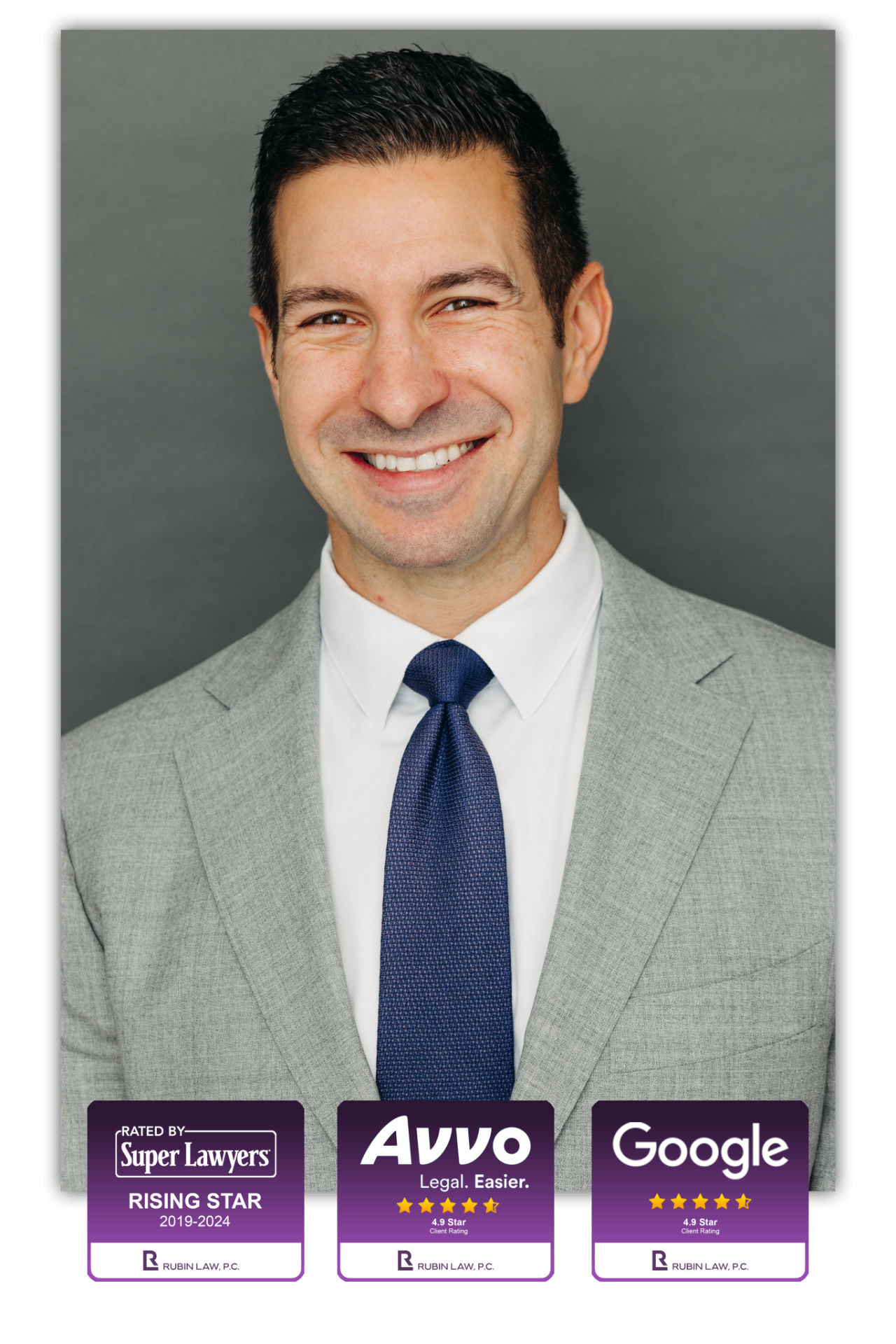
About the author
Daniel A. Rubin has defended thousands of clients across Los Angeles County against felony, misdemeanor, and federal charges — from DUI and drug crimes to violent felonies and white-collar prosecutions.
Call (213) 723-2337 for a Free ConsultationMore from DUI Defense
Many people wonder if they can work for Uber with a DUI. The answer is no. Uber's driver DUI policy focuses on safety, banning anyone with a DUI in the last seven years. This rule stops those with a…
Many people wonder how long does a DUI stay on your record in California . In California, the DUI record duration is important. It affects California DUI penalties and can change many things in your…
California is famous for its beautiful coastlines and big cities. But its strict driving laws are key to keeping roads safe. Looking ahead to 2025, California's DUI laws have seen major changes. This…
Available 24/7 — Free Consultation
Your first call is free and confidential. We answer nights and weekends.